

- Training
Microlearning in eLearning: A Complete Guide for Organizations

Microlearning has emerged as a truly impactful approach within the world of eLearning. With our increasingly shorter attention spans and the growing need for flexible learning solutions, organizations are now adopting microlearning to upskill employees and enhance learner engagement like never before. But what exactly is microlearning, and how can your organization truly leverage its benefits? Let’s explore the concept, its advantages, real-world applications, and actionable steps to get started.
What Is Microlearning?
Microlearning is a training approach that delivers content in small, digestible chunks. Think of it this way: instead of lengthy lectures or exhaustive courses, microlearning focuses on concise, targeted modules that typically last between just 3-7 minutes. These bite-sized sessions are designed to deliver one specific learning objective at a time.
The core idea behind microlearning is all about simplicity and focus. Learners can access highly relevant information quickly, without the cognitive overload that often comes with traditional training methods. Delivered via videos, quizzes, presentations, or interactive infographics, microlearning caters to modern learners’ growing preference for on-demand, user-friendly formats.
Microlearning aligns perfectly with the concept of “just-in-time” learning, allowing learners to access knowledge exactly when they need it. Whether it’s mastering a new skill, understanding a policy update, or preparing for a task, microlearning empowers them to learn efficiently and apply their knowledge in real-life situations.
The Value Proposition of Microlearning
Microlearning is more than just a trend; it is a powerful tool that enhances learning outcomes in numerous ways. Here are its most notable benefits:
- Improved Retention
Research shows that microlearning can improve knowledge retention by as much as 80%. By breaking down information into concise segments, learners are better able to absorb and recall key concepts over time. It’s easier to remember small pieces of information than a huge chunk, right? - Higher Engagement Rates
Traditional training methods often struggle to hold a learner’s attention, especially in today’s fast-paced environment. Microlearning, with its quick and focused modules, is tailored to shorter attention spans. In fact, learners are 4x more likely to complete microlearning courses compared to longer formats. - Faster Delivery and Reduced Costs
Microlearning development is both cost-effective and time-efficient. It reduces development costs by up to 50% and speeds up course delivery by 300%, making it an attractive choice for organizations looking to scale training efforts affordably. That’s a huge win for any budget. - Flexibility for Learners
With microlearning, learners can access content at their own pace. Early mornings, lunch breaks, or even commutes can become productive learning episodes, thanks to mobile-friendly formats and on-demand availability. Learning truly fits into their lives, not the other way around. - Reduced Cognitive Overload
By focusing on one concept or skill at a time, microlearning minimizes the risk of overwhelming learners with too much information at once. This makes the learning experience more manageable and impactful. - Supports Diverse Learning Preferences
Microlearning leverages formats like videos, quizzes, podcasts, and infographics, catering to varied learning preferences. This multimodal approach helps maximize learner engagement and accessibility.
How Organizations Are Using Microlearning in eLearning
Organizations across industries are already harnessing the power of microlearning to address diverse training needs. Here’s how they’re doing it:
1. Employee Onboarding
Microlearning is an exceptional tool for onboarding new employees. Companies are using it for short video overviews, interactive quizzes, and module-based lessons to help new hires learn company policies, team structures, and workplace tools step by step. This structured yet flexible approach ensures new employees quickly get comfortable and up to speed.
2. Upskilling and Reskilling
Industries like healthcare, technology, and retail have embraced microlearning for upskilling and reskilling initiatives. For instance, microlearning can provide quick tutorials on using new software, updates to compliance regulations, or advanced customer service techniques. It’s all about making sure teams have the most current knowledge they need to excel.
3. Product Training
For sales and customer support teams, understanding a product or service inside out is critical. Microlearning modules break down product features and value propositions into short lessons, often accompanied by interactive elements like scenario-based quizzes or flashcards. This helps them quickly grasp what they need to know to talk confidently about what they sell.
4. Compliance Training
Microlearning simplifies the delivery of compliance training, which, let’s be honest, can often feel like a chore. Bite-sized lessons, followed by quick quizzes, make it easier for employees to retain critical information on safety practices or ethical standards. This means they’re actually absorbing what they need to know, not just clicking through slides.
5. Reinforcement Training
The concept of spaced repetition, which is a key part of effective microlearning strategies, helps learners reinforce knowledge over time. Organizations use this approach to keep learners engaged with regular training refreshers, ensuring knowledge is retained long term. It’s all about preventing that knowledge from fading away.
6. Just-in-Time Learning
Retail and manufacturing companies often implement microlearning to provide workers with on-the-spot training. For instance, a warehouse employee may access a short tutorial to troubleshoot issues with new machinery or software. This way, they get immediate answers and can keep things moving without delays.
The Benefits of Microlearning
Microlearning really shines because it solves many of the pain points associated with traditional training programs. Here are some of its key benefits:
1. Accessibility and Scalability
Microlearning content is typically online and mobile-friendly, ensuring that learners can access it anytime, anywhere. This also makes it super easy to scale for organizations with dispersed teams or global operations.
2. Engaging and Interactive
Modern learners crave interactive experiences, and microlearning delivers big time. With formats like videos, gamified quizzes, and simulations, microlearning creates an engaging learning environment that fosters long-term involvement.
3. Time Efficiency
Speaking of time, focused microlearning videos are most effective when they last between 3-7 minutes, as this length promotes optimal retention. This respects both the learner’s and the organization’s time.
4. Cost-Effectiveness
By reusing existing content, automating learning pathways, and minimizing development time, microlearning reduces costs for organizations while delivering high-quality employee training.
5. Data-Driven Insights
Microlearning platforms often provide analytics tools that enable companies to track learners’ progress, completion rates, and understanding of concepts. These insights help optimize future training efforts. It’s like having a clear roadmap to better learning.
How to Get Started with Microlearning Content
Transitioning to microlearning doesn’t have to be overwhelming. In fact, it can be quite straightforward. Here’s a step-by-step plan to help you create effective microlearning content:
Step 1. Audit Existing Learning Materials
Start by gathering your organization’s existing training resources, including presentations, PDFs, eLearning modules, and videos. Categorize this content by topics or objectives to identify which elements can be repurposed for microlearning.
Step 2. Define Learning Objectives
For each microlearning module, establish one clear and actionable learning objective. This will keep the content concise and relevant. For example, if creating a sales training module, one objective could be “how to handle common customer objections.” Keeping it focused is key!
Step 3. Choose a Delivery Format
Select the right format depending on content type and learner preferences. Videos make concepts more visual and memorable, quizzes encourage active recall, and infographics simplify complex ideas.
Step 4. Repurpose Existing Content
Start by breaking down your existing long-form content into focused microlearning modules. Use Panopto’s “Save As” feature to copy a training video, trim it to highlight only the most relevant sections, and save it as new, bite-sized content. Choose whether to keep or remove the trimmed parts. This is a fast and effective way to reuse valuable material, eliminate sensitive content, and deliver targeted learning in minutes.
Step 5. Leverage AI-Powered Tools
Accelerate content creation with AI-powered tools like Elai:
- Generate video outlines instantly using AI storyboarding.
- Convert PowerPoint decks into dynamic videos with customizable visuals.
- Add interactive elements such as branching scenarios, clickable buttons, and quizzes.
- Translate your modules into 75+ languages with one-click AI translation.
Use these tools to build engaging, scalable, and globally accessible microlearning experiences.
Step 6. Build Modules with Spaced Repetition
Design your microlearning strategy using the spaced repetition method. Deliver modules over time to reinforce concepts and aid memory retention. Start with foundational lessons and follow up with advanced topics or refreshers. This is how you ensure knowledge truly sticks.
Step 7. Test and Optimize
Pilot your microlearning courses with a small group of learners. Gather feedback and use analytics to assess which modules engage effectively and where additional improvements are required. It’s where you refine for success.
Step 8. Go Live and Monitor Results
Once optimized, roll out the microlearning program. Monitor completion rates, engagement levels, and learner performance to measure the overall impact. Use these insights to continuously refine your approach.
Final Thoughts
Microlearning is the perfect fit for modern organizations looking to boost learner engagement, improve productivity, and reduce training costs. Its concise, focused delivery meets the demands of a fast-paced, digital-first world, helping learners retain knowledge and apply it effectively.
By repurposing existing content and integrating AI-powered tools, your organization can easily kick-start an efficient microlearning strategy that delivers measurable results. No matter the industry or scale, investing in microlearning is an investment in your workforce’s potential and growth. The time to act is now!
Latest News
-
- Remote Work
How Our Customers Made Panopto a G2 Spring 2026 Leader
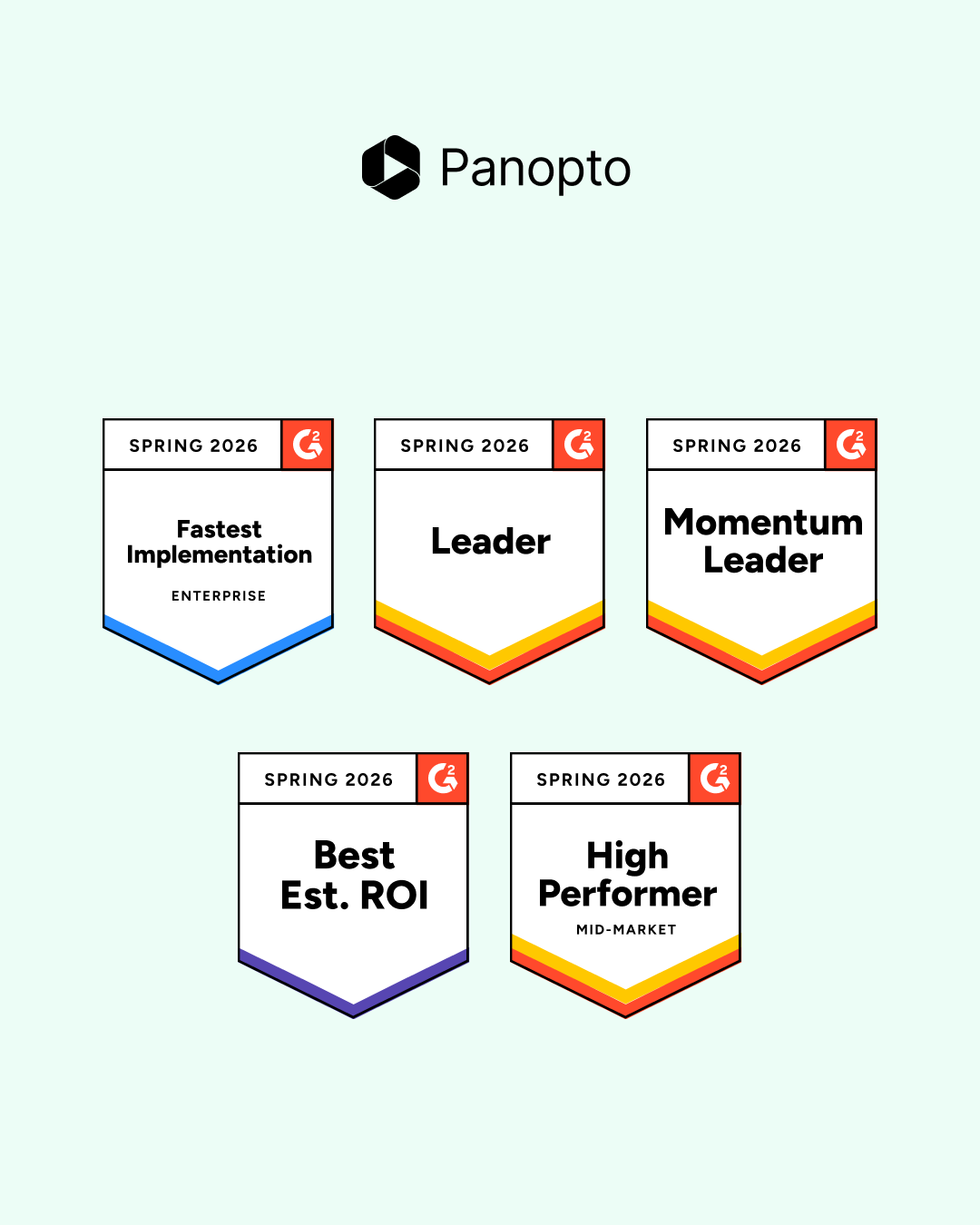
We’re proud to support the customers whose feedback and real-world outcomes led to Panopto being recognized with multiple G2 Spring 2026 badges. This season, Panopto earned Leader, Momentum Leader, High Performer, Fastest Implementation, and Best Estimated ROI badges across multiple G2 Spring 2026 Reports, based on its performance within the Video Communications, Video CMS, Virtual…
How Our Customers Made Panopto a G2 Spring 2026 Leader
-

- Enterprise Video Platform
Best Video Management Platforms for Training and L&D Teams in 2026
Most video platforms were built for marketing teams. They track clicks, conversions, and ad performance. That’s useful if you’re selling a product. It’s not useful if you’re training 5,000 employees on updated compliance procedures and need to know who actually watched the whole thing. Training teams have a different set of problems to solve. You…
Best Video Management Platforms for Training and L&D Teams in 2026
-

- Webinar Recap
Beyond the Prompt: Key Webinar Insights on AI as a Strategic Thought Partner
The landscape of Artificial Intelligence in Learning and Development has reached a critical tipping point. It is no longer a question of whether organizations are introducing these tools, especially as AI adoption jumped from 55% to 78% in the last year alone. Instead, the focus has shifted to whether they are using it to move…
Beyond the Prompt: Key Webinar Insights on AI as a Strategic Thought Partner