
Upskilling & Reskilling: Essential Corporate Education Strategies for Workforce

To thrive in today’s fast-paced, technology-driven world, companies must prioritize corporate education like never before. The LinkedIn Learning 2020 Report on workplace learning proves that 94% of employees believe they would remain with a company longer if it invested in their learning and development. With the rise of digital transformation, remote work, and changing workforce dynamics, organizations need modern approaches to corporate education that cater to diverse learning needs. This article explores key corporate education strategies for the modern workforce.
What is Corporate Education?
Corporate education is a system of learning activities designed to educate employees while focusing on upskilling and reskilling. It can include training programs, online courses, workshops, conferences, and other educational opportunities. Employers typically provide corporate education to help their employees develop the skills and knowledge they need to succeed in their jobs and advance their careers within the company.
There are many different types of corporate education programs available. The best program for a particular business will depend on the needs of both the business and its employees. However, some common types of corporate education programs include:
- Onboarding programs
- Technical training
- Sales training
- Leadership development
- Compliance training
Businesses can help employees develop the skills and knowledge they need to succeed by investing in their education.
Top 6 Corporate Education Strategies
Corporate education is an essential investment for businesses. It can help them improve employee productivity, increase engagement, and reduce employee turnover. This approach to upskilling and reskilling can also help them attract and retain top talent. In addition, corporate education can help businesses stay competitive by ensuring that their employees have the latest skills and knowledge.
Key Elements of a Successful Strategy:
- Alignment with Business Objectives
- Needs Assessment by Identifying Skills and Knowledge Gaps
- Diverse Learning Methods
- Employee Engagement
- Measurement and Evaluation of the Effectiveness of Training
1. Personalized Learning Paths
Personalized Learning Paths (PLPs) are customized learning journeys designed for individual employees based on their specific roles, skill levels, learning styles, and career aspirations. Unlike traditional one-size-fits-all training programs, PLPs leverage AI-driven platforms and adaptive learning modules to provide employees with relevant and engaging content that aligns with their unique needs and goals.
Key components:
- AI-driven platforms
- Adaptive learning modules
- Self-paced learning
- Diverse content formats
- Personalized feedback and support
Benefits For Employees:
- Increased engagement and motivation
- Improved skills and knowledge
- Greater flexibility and control
- Enhanced career development
Benefits For Organizations:
- Improved employee performance
- Increased employee retention
- Reduced training costs
- Improved business outcomes
Panopto for Personalized Learning Paths
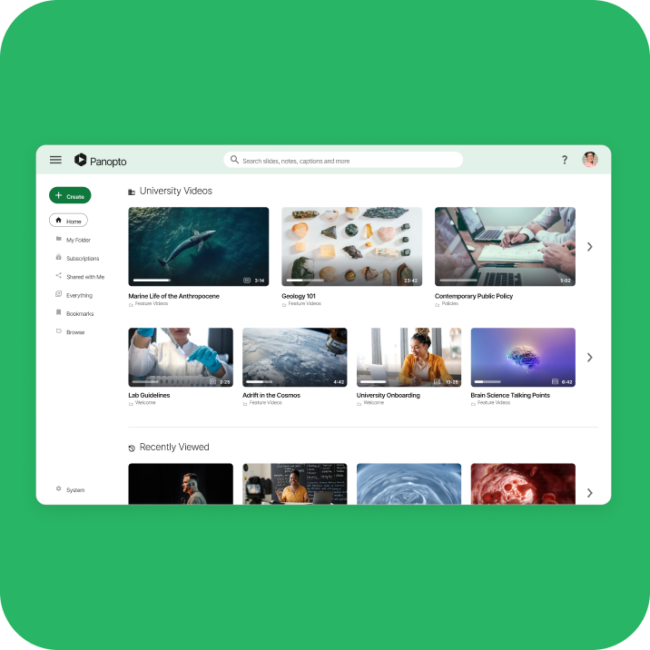
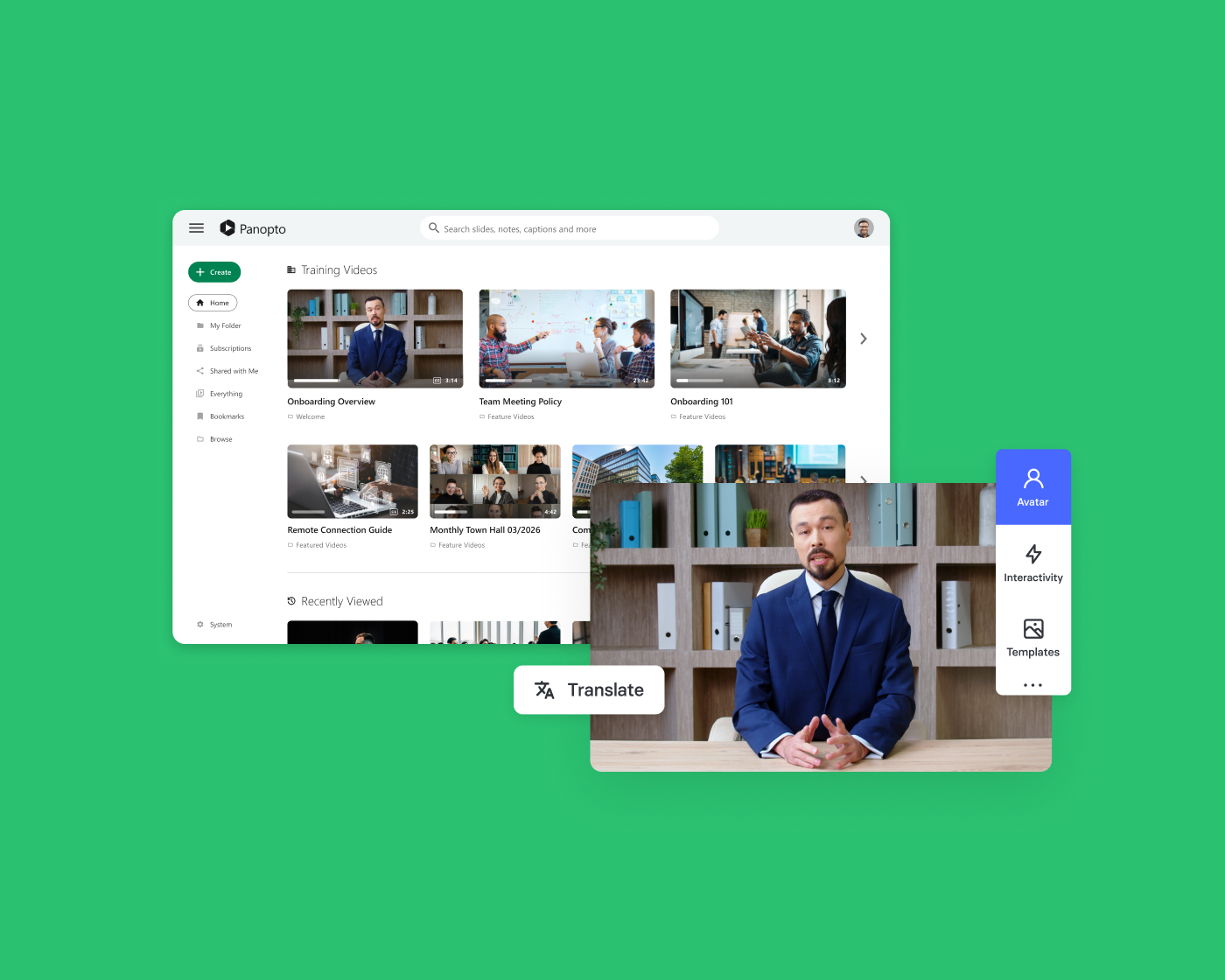
Panopto is a leading video platform that enhances personalized learning through its innovative features and AI-powered tools. By leveraging Panopto, educators, and organizations can create tailored learning experiences that cater to individual needs and preferences via AI-powered transcripts and content summaries, smart chapters, and enhanced navigation within videos. The platform automatically creates smart chapters within videos, allowing learners to jump directly to specific sections of interest. These functionalities support personalized learning paths by enabling users to focus on content relevant to their needs, thereby enhancing engagement and retention.
2. Microlearning & Bite-Sized Content
Microlearning breaks down complex topics into manageable, easily digestible units like video clips, infographics, or interactive modules.
Benefits for Employees:
- Increased engagement
- Improved knowledge retention
- Flexibility and convenience
- Personalized learning
- Enhanced motivation
Benefits for Organizations:
- Cost-effectiveness
- Increased efficiency
- Improved employee engagement
- Enhanced knowledge sharing
- Better learning outcomes
3. Blended Learning Approach
Blended learning is a corporate education strategy combining various learning methods to create a comprehensive and engaging employee experience. It typically involves online courses, instructor-led training, hands-on workshops, virtual simulations, and gamified training.
Benefits for Employees:
- Flexibility
- Improved engagement and hands-on activities
- Personalized learning
- Practical application of knowledge and skills in real-world scenarios
- Improved knowledge retention
Benefits for Organizations:
- Cost-effectiveness
- Scalability
- Consistency
- Measurable results
- Increased employee productivity
- Improved business outcomes
4. Continuous Learning & Upskilling Programs
Continuous learning and upskilling programs are initiatives designed to help employees acquire new skills, enhance their expertise, and stay up-to-date with the latest industry trends. These programs can take various forms, including training sessions, certification programs, skill development workshops, online courses and resources, mentorship and coaching, job rotations, and cross-training.
Benefits for Employees:
- Enhanced career prospects
- Increased job satisfaction
- Improved confidence and self-esteem
- Greater adaptability
- Higher earning potential
Benefits for Organizations:
- Improved employee performance
- Increased innovation
- Enhanced competitiveness
- Improved employee retention
- Stronger employer brand
- Greater agility
5. Peer Learning & Social Collaboration
Peer learning involves employees learning from each other through mentorship programs, knowledge-sharing initiatives, and collaborative projects. Social collaboration utilizes internal social platforms or Learning Management Systems with discussion forums to facilitate employee communication and knowledge exchange.
Benefits for Employees:
- Enhanced learning with knowledge and insights from colleagues’ experiences
- Skill development
- Increased engagement
- Personal growth, feedback,& self-reflection
- Expanded network
Benefits for Organizations:
- Improved Knowledge
- Enhanced Employee Engagement
- Cost-Effective Learning
- Employee Onboarding Automation
- Increased Innovation
- Stronger Organizational Culture
6. Real-World Application & Experiential Learning
Real-world application and experiential learning is a corporate education strategy emphasizing learning by doing. It moves away from traditional, passive learning methods like lectures and allows employees to apply their knowledge and skills in real-world scenarios. This approach to upskilling and reskilling aims to make learning more engaging, relevant, and effective by connecting theory to practice. Key components include on-the-job training, job rotations, cross-functional projects, scenario-based training, simulations, mentoring, and coaching.
Benefits for Employees:
- Increased knowledge retention
- Enhanced skills & competencies
- Improved problem-solving abilities
- Greater confidence
- Career development
Benefits for Organizations:
- Improved employee performance
- Increased employee engagement and retention
- Enhanced organizational capabilities
- Better problem-solving and decision-making
- Stronger learning culture
Building a Culture of Continuous Growth
Corporate education is no longer a one-size-fits-all approach. Companies must embrace personalized, technology-driven, and continuous learning strategies to equip employees with the skills needed for a dynamic work environment. Organizations can ensure sustained growth, innovation, and employee satisfaction in the modern workforce by fostering a lifelong learning and inclusive culture.
Latest News
-

- Enterprise Video Platform
Best Video Management Platforms for Training and L&D Teams in 2026
Most video platforms were built for marketing teams. They track clicks, conversions, and ad performance. That’s useful if you’re selling a product. It’s not useful if you’re training 5,000 employees on updated compliance procedures and need to know who actually watched the whole thing. Training teams have a different set of problems to solve. You…
Best Video Management Platforms for Training and L&D Teams in 2026
-

- Webinar Recap
WCAG 2.1 Level AA Video Accessibility: Proven Strategies from Leading Universities
Video has become essential to teaching and learning across higher education, but accessibility is often treated as an afterthought rather than a design principle. As institutions prepare for ADA Title II digital accessibility requirements, the question isn’t whether to make video accessible, but how to do it sustainably at scale. WCAG 2.1 Level AA has…
WCAG 2.1 Level AA Video Accessibility: Proven Strategies from Leading Universities
-
- Product Spotlight
From Creation to Impact: One Unified Workflow for AI Video Learning
We’re creating a seamless path from AI-powered video creation to secure delivery, discovery, and measurement. The result is one unified workflow that reduces friction and helps organizations move faster from content creation to real learning impact.
From Creation to Impact: One Unified Workflow for AI Video Learning