




From Assessment to Action: A Guide to Training Needs Analysis

A training needs analysis is an essential process that helps organizations identify skills gaps and development requirements within their workforce. Businesses can tailor practical approaches to setting proper training needs and analysis of employee performance, productivity, and overall company success by conducting a thorough analysis.
What is a Training Needs Analysis?
A training needs analysis is the systematic process of identifying training requirements to improve employee capabilities. It ensures that training initiatives align with organizational goals and individual development needs.
Why is a Training Needs Analysis Important?
A primary training needs analysis example helps organizations determine areas where employees lack necessary skills, allowing them to identify skills gaps. It also improves performance by addressing weaknesses and enhancing productivity. Additionally, it optimizes resources by ensuring that video training programs focus on areas needing improvement. Furthermore, it enhances employee satisfaction by providing opportunities for professional growth.
Who Needs a Training Needs Analysis?
A training needs analysis is essential for various individuals and organizations that aim to enhance skills, improve performance, and achieve strategic goals. Here are some key groups that need a training needs analysis:
1. Organizations & Businesses
- Companies looking to improve workforce productivity and efficiency.
- Businesses implementing new technology, processes, or regulations.
- Organizations facing skills gaps or declining employee performance.
2. Human Resource Departments
- HR professionals responsible for workforce development and succession planning.
- HR teams designing training programs to align with company objectives.
3. Managers & Team Leaders
- Supervisors aiming to enhance team performance.
- Leaders looking to upskill employees for career growth.
4. New Employees & Onboarding Programs
- Organizations onboarding new hires who need role-specific training.
- Companies ensuring smooth transitions into new job responsibilities.
5. Industries with Compliance Requirements
- Healthcare, finance, and legal sectors requiring compliance training.
- Manufacturing and construction industries needing safety training.
6. Educational Institutions & Training Providers
- Schools, colleges, and universities developing skill-based curricula.
- Training providers designing corporate learning programs.
7. Government & Non-Profit Organizations
- Public sector agencies improving workforce skills for community service.
- NGOs upskilling employees to meet project objectives.
The Learner Persona and How It Is Applicable for Training Needs Analysis
A learner persona is a semi-fictional representation of the target learners, created based on data and insights about their demographics, backgrounds, motivations, learning preferences, and challenges. It is highly applicable for training needs analysis because it helps organizations design and deliver more targeted, effective, and engaging learning experiences. This approach enhances learning impact by:
- Identifying Specific Training Needs
- Personalizing Learning Approaches
- Enhancing Training Effectiveness
- Improving Engagement and Motivation
- Supporting Role-Specific and Adaptive Learning
- Optimizing Resource Allocation
- Enabling Continuous Improvement
Determining Learner Persona with FigJam Customizable Dashboard
Learner personas can be determined using the FigJam customizable dashboard. This template helps L&D professionals and instructional designers create detailed learner personas that represent their target audience. By understanding your learners’ backgrounds, goals, preferences, and challenges, you can design relevant and impactful learning experiences.
Download Learner Persona Figma Template
Steps to Conduct a Training Needs Analysis
- Know your goals: Align training with business objectives.
- Collect data: Use questionnaires, surveys, reviews, and observations.
- Find skill gaps: Compare current vs. needed skills.
- Prioritize needs: Focus on impact, urgency, and goals.
- Plan training: Set objectives, choose methods, and plan assessments.
- Deliver training: Engage and motivate employees.
- Evaluate results: Measure training impact and improvements.
Training Needs Assessment Questions
What is the training needs assessment definition? It is a tool used by organizations to identify and assess the skills, knowledge, and competencies employees need to perform their jobs effectively. The training needs analysis questionnaire typically consists of questions to uncover gaps between employees’ current skillsets and the skills required for their roles. This helps the organization understand the specific training needs of employees and design targeted training programs to address those needs.
When developing a training needs assessment, consider the following questions:
- What are the key responsibilities of your role?
- Which tasks do you find most challenging?
- Do you feel confident in your current skill set?
- What additional training would help you perform better?
- Are there any areas of your job that could be more efficient with additional training?
- Which skills are essential for your role but you haven’t mastered yet?
- Does your current training program meet your professional development needs?
- How do you usually approach learning new tasks or tools at work?
- Are there any technologies or tools you should be trained on to improve your performance?
- What type of training format (e.g., online courses, workshops, on-the-job training) do you prefer?
- How do you usually stay updated on new trends or changes in your industry?
- Do you face any challenges or barriers when seeking training or professional development opportunities?
- What skills or knowledge would help you advance to the next level in your career?
- What motivates you to participate in training or professional development programs?
- Do you prefer individual training sessions or group learning experiences?
- Are there any specific areas of personal development you’d like to focus on through training?
- In your opinion, what would make a training program more effective for your role?
- How do you measure your success or progress after completing a training session?
Maximizing Training Impact
A well-executed training needs analysis sample ensures that employees receive targeted training, improving job performance and organizational success. By utilizing training needs analysis questionnaires and prioritizing skill gaps, businesses can maximize the effectiveness of their training programs. Investing in workforce development leads to a more skilled and motivated team, driving long-term success. Want to scale your video content? Click here to learn more about AI Training content creation.
Latest News
-

- Higher Education
Video Tool Sprawl in Community Colleges and the Case for Consolidation
It starts innocuously enough: one department begins storing lecture recordings in Zoom, another uses YouTube for course content, faculty in the nursing program upload skills demos to a shared Google Drive, or the distance education team purchases a standalone captioning tool to address an ADA complaint. Each of those decisions was reasonable in isolation, but…
Video Tool Sprawl in Community Colleges and the Case for Consolidation
-
- Remote Work
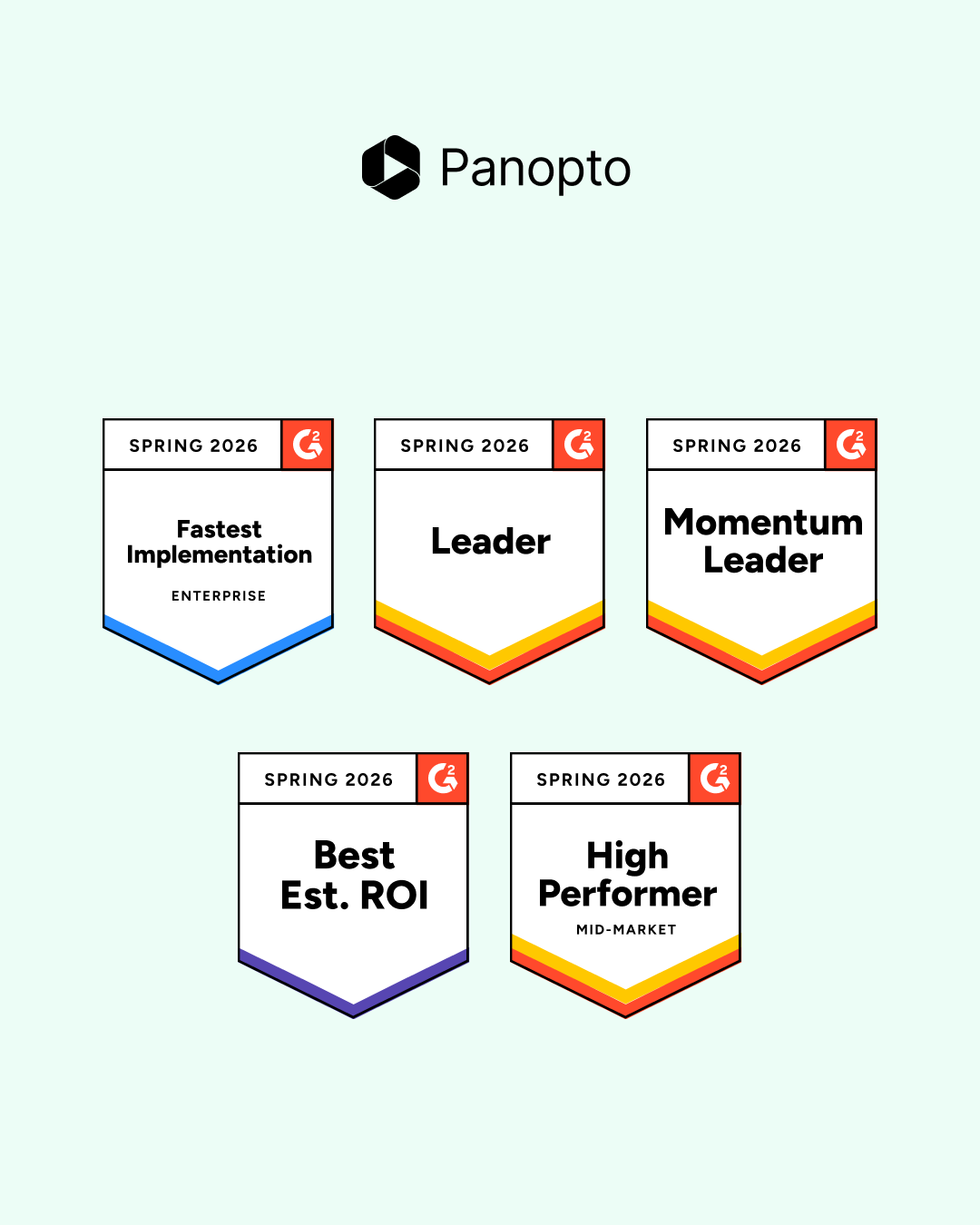
How Our Customers Made Panopto a G2 Spring 2026 Leader
We’re proud to support the customers whose feedback and real-world outcomes led to Panopto being recognized with multiple G2 Spring 2026 badges. This season, Panopto earned Leader, Momentum Leader, High Performer, Fastest Implementation, and Best Estimated ROI badges across multiple G2 Spring 2026 Reports, based on its performance within the Video Communications, Video CMS, Virtual…
How Our Customers Made Panopto a G2 Spring 2026 Leader
-

- Enterprise Video Platform
Best Video Management Platforms for Training and L&D Teams in 2026
Most video platforms were built for marketing teams. They track clicks, conversions, and ad performance. That’s useful if you’re selling a product. It’s not useful if you’re training 5,000 employees on updated compliance procedures and need to know who actually watched the whole thing. Training teams have a different set of problems to solve. You…
Best Video Management Platforms for Training and L&D Teams in 2026