





Dr. Nicholas Worsfold believes video works best as a natural part of teaching.
As Associate Pro-Vice Chancellor for Education – Student Experience and a Reader in Environmental Sciences at Brunel University of London, Worsfold has used video in education for more than a decade. His approach has evolved well beyond lecture capture. He uses video to continue conversations after class, help students prepare for unfamiliar experiences, and better understand where they may need additional support.
Worsfold believes “it’s the application of the tool that matters.” Panopto gives him a simple way to put that into practice, making video part of the day-to-day learning experience.
Bringing video into the conversation of learning
As an early adopter of lecture capture technology, Worsfold has long considered how recorded video could complement face-to-face teaching and add depth beyond the classroom.
Over time, video became a way to keep the conversation going.
Say a student asks an interesting question after class, and Worsfold thinks of a better answer on the walk back to his office. He does not need to wait until the next lecture, or limit the response to one student. He can record a short video and share it with the whole class while the discussion is still fresh.
He sees those moments as part of “bringing your students with you.” An idea that comes to him after class, or something he encounters outside the classroom, can become part of the learning experience.
Worsfold once saw another educator demonstrate this at a conference. The educator met a NASA astronaut whose mission connected directly to something their students had studied. The educator asked the astronaut to record a short message for the class. What stayed with Worsfold was the educator’s instinct to connect something relevant directly into the students’ experience. The message itself mattered far less than the fact that the educator was thinking about their students.
That same thinking shapes how Worsfold uses video in his own teaching. The production does not need to be polished, as long as it helps students understand, see, or engage with something more effectively.
“If you want to give students a head start on how to use a microscope before you actually get into the lab, make a video of you using a microscope,” Worsfold says. “Don’t write 3,000 words on how to use a microscope.”
A short recording might revisit a difficult point from class, point students toward a relevant paper, or show something easier to understand visually. Worsfold uses video to create more of those moments around formal teaching, without turning each one into a production exercise.
Using video engagement to understand where students need support
Worsfold also uses video analytics to understand how students are engaging with their learning.
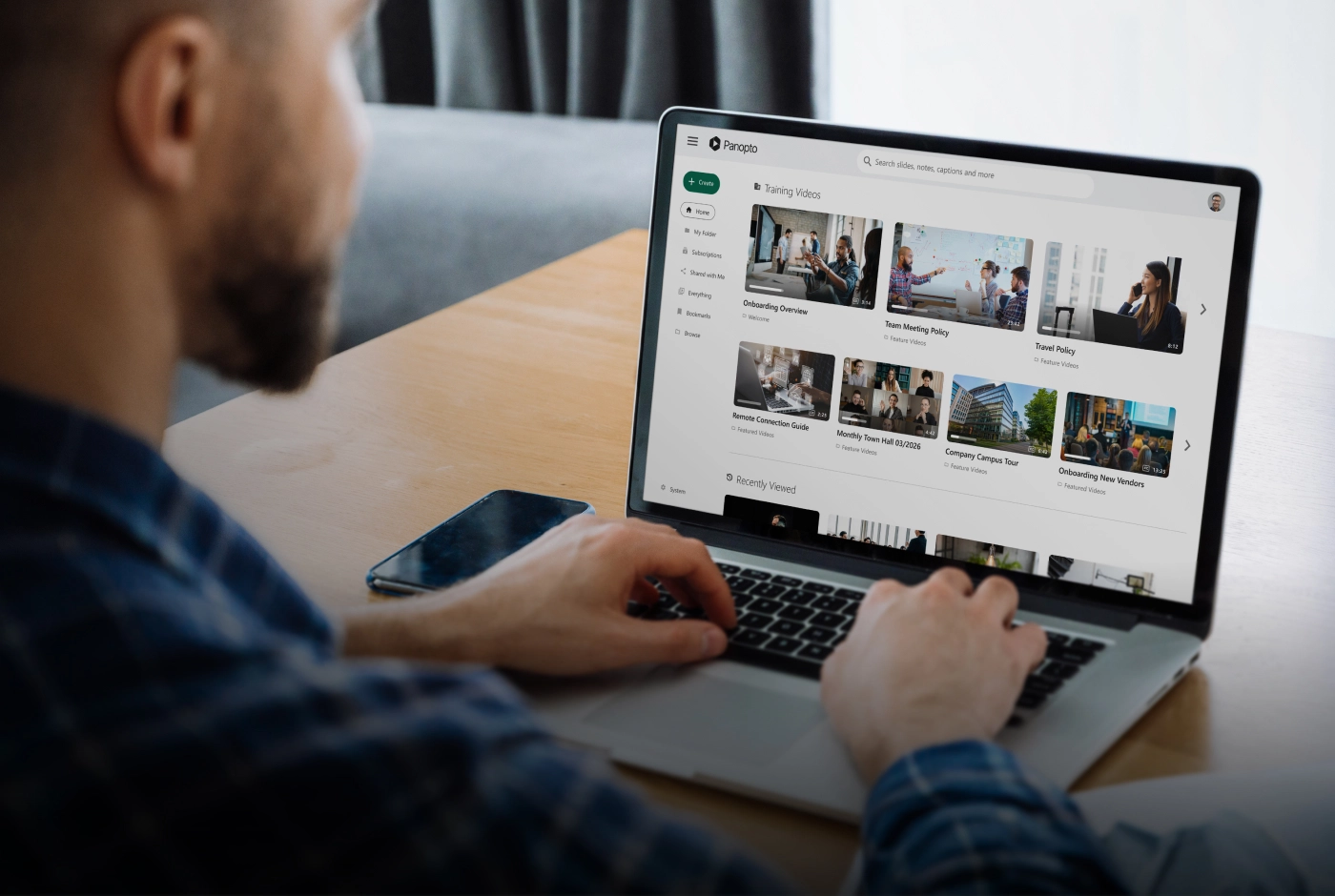
Panopto analytics let him see more than whether a student opened a video. Viewing patterns give him useful context about how students work through material and, in some cases, where they may need more support. His residential field courses offer a good example.
As part of his environmental sciences teaching, Worsfold takes students on field courses in locations including Portugal and Tenerife. Before they travel, he creates videos that show students what to expect, including accommodation, transportation, dining arrangements, and practical trip details.
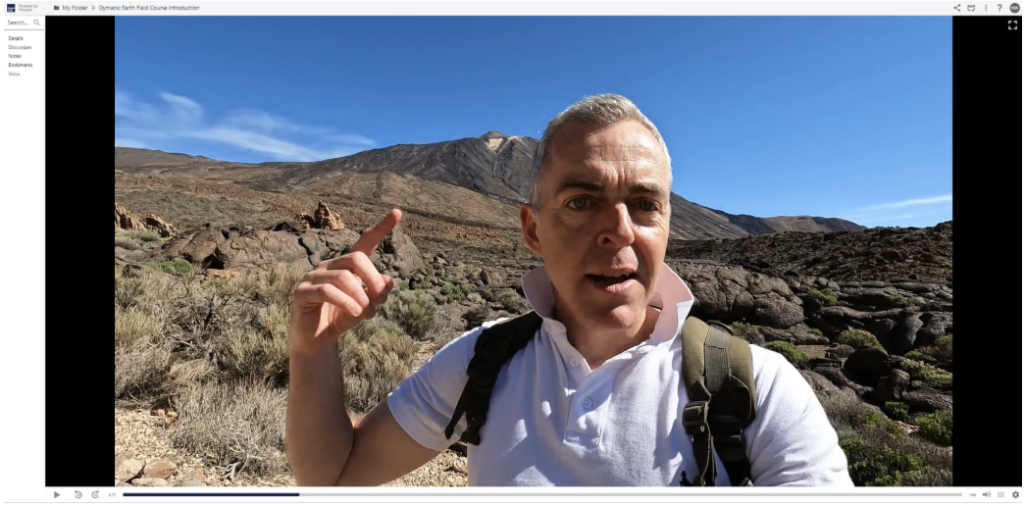
Students traveling away from home or entering an unfamiliar environment for the first time can see those details in advance, which can reduce uncertainty. From that data, Worsfold can see how individual students are preparing.
Before one field course, a student watched a 23-minute briefing six times. Worsfold saw that repeated viewing as a possible sign of anxiety and arranged a face-to-face conversation with the student. Another student engaged with similar content in shorter sections. Because Worsfold could see the student’s identity in Panopto and knew she had attended a previous residential field course, he didn’t need to be concerned.
Worsfold describes the value as understanding “not just whether students have engaged with the content, but how they’re engaging and what that tells me.”
Analytics add to his knowledge of the student, giving him another source of information to help him decide when someone may benefit from additional support.
Making this approach practical with Panopto
This approach depends on technology that makes teaching easier.
Worsfold’s approach relies on acting when a useful teaching moment appears. A follow-up after class works because he can create it quickly. A field-course video works because he can show students a location instead of trying to describe it. Engagement data is useful because it sits alongside the content and gives him a clearer picture of how students use what he shares.
“The easiest thing about creating video in Panopto is just how easy it is. Click on the app, open it up, and just press record. It’s removed any technical barriers from achieving what I’m trying to do with my teaching through video.”
Associate Pro-Vice Chancellor for Education – Student Experience, Brunel University of London
That ease of use gives him more freedom to use video where he sees it making a difference in his courses. At his desk, he can record directly. When his environmental sciences teaching takes him outside, he can capture something on his phone and add it to Panopto later. Once students start watching, he can see how they engage with the material.
The technology supports a teaching approach built around immediacy, visual learning, and staying connected with students.
Worsfold encourages other educators to look first at where video makes sense in the learning experience. What would be easier to show than describe? What might students benefit from revisiting? Where could a short video extend a conversation beyond the classroom?
Worsfold finds that Panopto makes those moments easy enough to act on.
Lecture capture may have been the starting point, but video has become part of a much broader conversation about how students learn, engage, and get the support they need.