





Ferrilli helps colleges and universities modernize the technology that supports their institutions. Through consulting, implementation services, and ongoing customer support, the company helps higher education organizations adopt complex systems with confidence.
Their work depends on knowledge: consultants need to understand the products they support, new employees need to get up to speed quickly, and clients need guidance long after implementation is complete. As Ferrilli has grown, learning has become an increasingly important part of how they develop their teams and deliver value to customers.
When Catherine Cooley joined Ferrilli in late 2024 as Education Director, she needed to find the right tools to build an established learning program to fuel the organization’s success.
The challenge
Building an L&D function from scratch
Learning had always been part of daily business at Ferrilli, including employee onboarding, compliance training, and sharing product knowledge across teams. But those efforts had all developed organically, with different departments creating their own materials and approaches over time.
“There was really no L&D department,” Cooley says. “Everybody did L&D, which meant nobody really owned L&D.”
Creating a centralized learning function meant bringing consistency to employee education, and it also provided an opportunity to rethink the company’s approach to learning.
Throughout her career, Cooley had learned that people don’t absorb information the same way. An uninterrupted presentation or a document someone is expected to read from beginning to end isn’t effective for everyone. What works is combining different modes of instruction, giving learners opportunities to listen, watch, reflect, and interact.
“You teach in different modes,” she says. “You do some audio things, you do some visuals, you do some reading, you do some testing…this gives the learner a chance to break up the redundancy and engage different parts of their brain while learning.”
To carry out that vision, Ferrilli needed a way to build those different kinds of learning experiences consistently, without requiring a production team or a large L&D unit to do so.
Finding the right tool
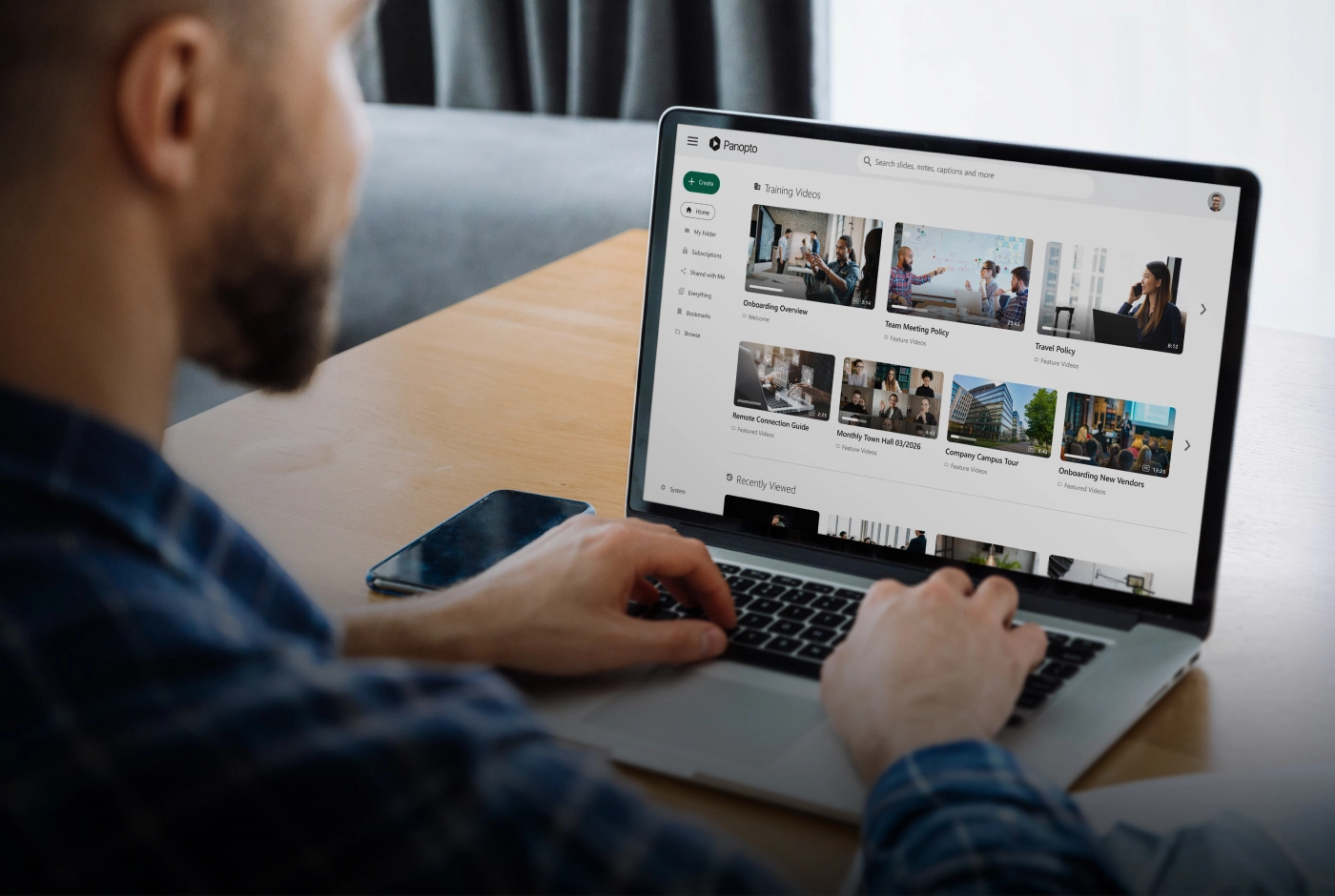
Ferrilli had already licensed Panopto’s AI Video Studio when Cooley joined the company, but no one had yet built a strategy to use it. She saw an immediate opportunity for it across employee education experiences like onboarding and product training.
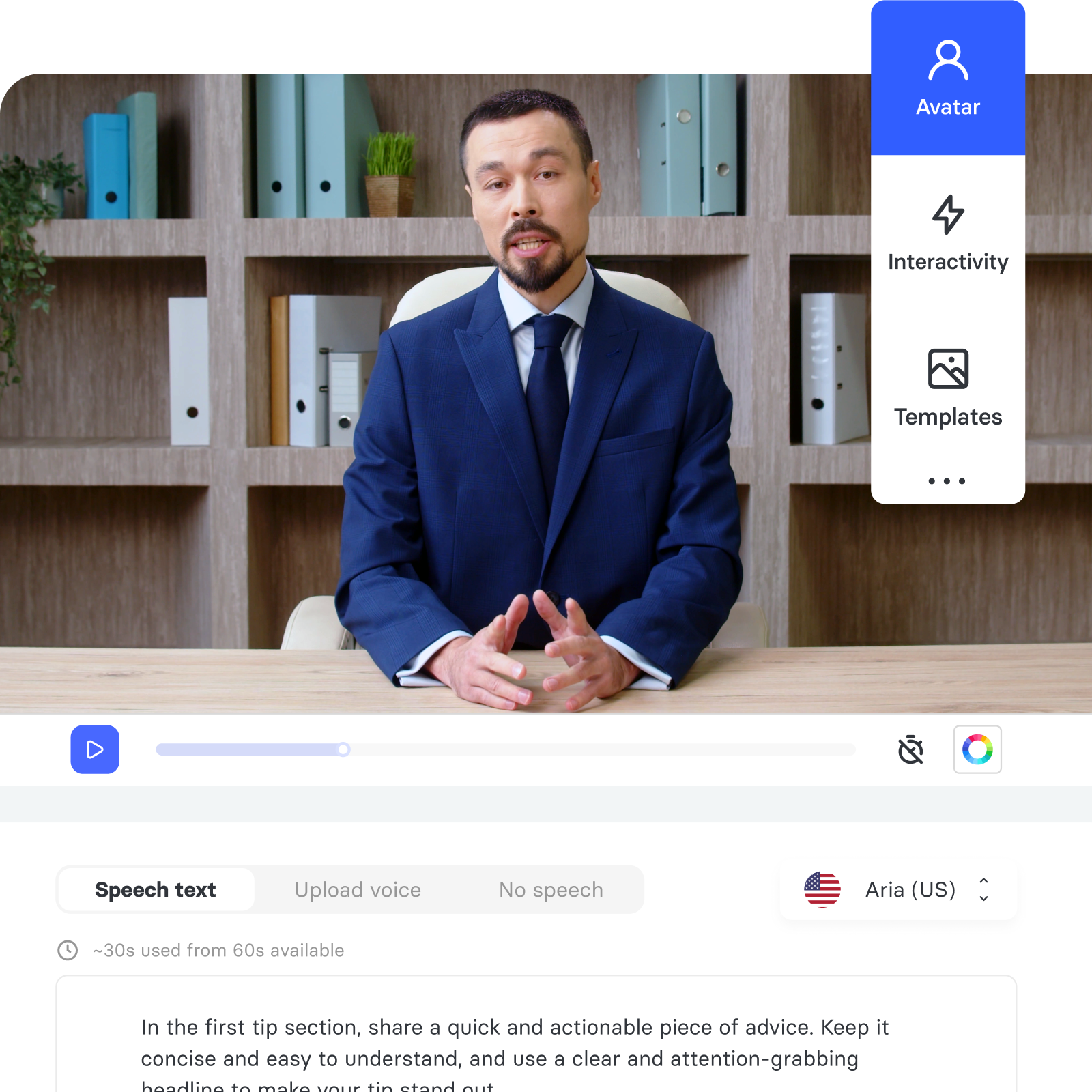
Rather than creating narrated presentations, she envisioned learning experiences that felt guided by an instructor. With the AI Video Studio, AI presenters could introduce topics, explain transitions, reinforce key concepts, and create a more conversational rhythm throughout a course.
For Cooley, that was the real breakthrough.
“Panopto’s AI Video Studio allows me to move from a recorded PowerPoint or a live, instructor-led session to create one repeatable video that feels like instructor-led training. It’s been a total game changer.”
Education Director, Ferrilli
That approach also fit the reality of her role. “I’m one of one,” she says, noting the importance of a tool that allows her to create engaging learning experiences that could be repeated, updated, and scaled by herself.
The solution
AI-avatar presenters instead of recorded slides
Cooley’s priority was rebuilding Ferrilli’s onboarding experience.
She replaced inconsistent presentations with shorter learning modules built around a recurring AI presenter named Vanessa. Rather than simply narrating slides, Vanessa welcomed learners, introduced new topics, and guided employees through each course. Employees immediately responded to the change.
“People made reference to ‘the lady that you work with,’ and I thought: what lady? I’m the only person on this team. And they started describing her, and it was Vanessa.”
Once, a manager reached out after a new-hire cohort completed onboarding.
“They’re trying to figure out if the lady on the video is real or not,” Cooley recalls the manager telling her.
For Cooley, those conversations confirmed that employees weren’t simply consuming another narrated presentation. They felt as though someone was guiding them through the experience.
Next, compliance training, security awareness, and product education became opportunities to rethink how learning was delivered. As she builds each course in TalentLMS, Cooley deliberately inserts short avatar-led videos throughout. “Sometimes I just think, ‘I need a break here. I need a visual. I need something different,’” she says. Rather than appearing only at the beginning of a course, AI presenters become recurring guides that keep learners engaged throughout the experience.
The most tedious topics now have more color. “Could you find a more boring topic than compliance training?” Cooley jokes.
“With AI Video Studio, I’m able to take a really dry topic and add some life into it, without requiring any additional resources or budget or headcount”
Education Director, Ferrilli
The results
37 courses and counting
During her first full year leading learning at Ferrilli, Cooley created 37 new courses totaling nearly seven hours of training content, with an average course length of approximately ten minutes.
Sixty-eight percent of Ferrilli employees completed at least one course during the year, and 84% logged into the learning platform. Learners completed an average of nine courses each, and one company-wide security training achieved an unprecedented 95% completion rate.
But for Cooley, the most meaningful change wasn’t captured in a dashboard, but in engagement.
“I may have a tutorial that’s 12 minutes long, and I can see someone completed that tutorial in three minutes. Well…no, they didn’t,” she says. “I’m seeing a lot less of that.”
Completion metrics suggest employees were spending more time engaging with the material instead of rushing through required training or letting videos play in the background.
Feedback from new hires reflected the same shift. “It’s the first time that people have said, ‘This is one of the best onboardings we’ve had,’” Cooley remarked.
The success of Ferrilli’s internal learning programs also created an opportunity beyond employee education, as Cooley began applying the same instructional philosophy to customer-facing training. At first, she wasn’t convinced AI presenters belonged in client tutorials. Then, she had what she describes as an epiphany.
“One morning, I woke up, and I thought, ‘What a great way to introduce my tutorial!’”
Today, AI presenters introduce learning objectives, guide customers through transitions between topics, and create continuity across training sessions.
“When you think about big conferences, you always have a facilitator that introduces the speaker,” Cooley says. “Why couldn’t we recreate that?”
What began as an effort to improve employee learning has become a model for how Ferrilli shares knowledge more broadly—internally and with the customers they serve.
Looking ahead
From employee training to customer education
For Cooley, success was never measured by the number of courses she created. It was measured by whether people actually wanted to learn from them.
As Ferrilli continues to grow, that philosophy will continue to shape how the company develops employees, shares expertise, and supports customers. By making learning feel guided rather than presented, Ferrilli has built a foundation that can scale alongside the business.
See how Panopto’s AI Video Studio can help your team build learning experiences like Ferrilli’s.